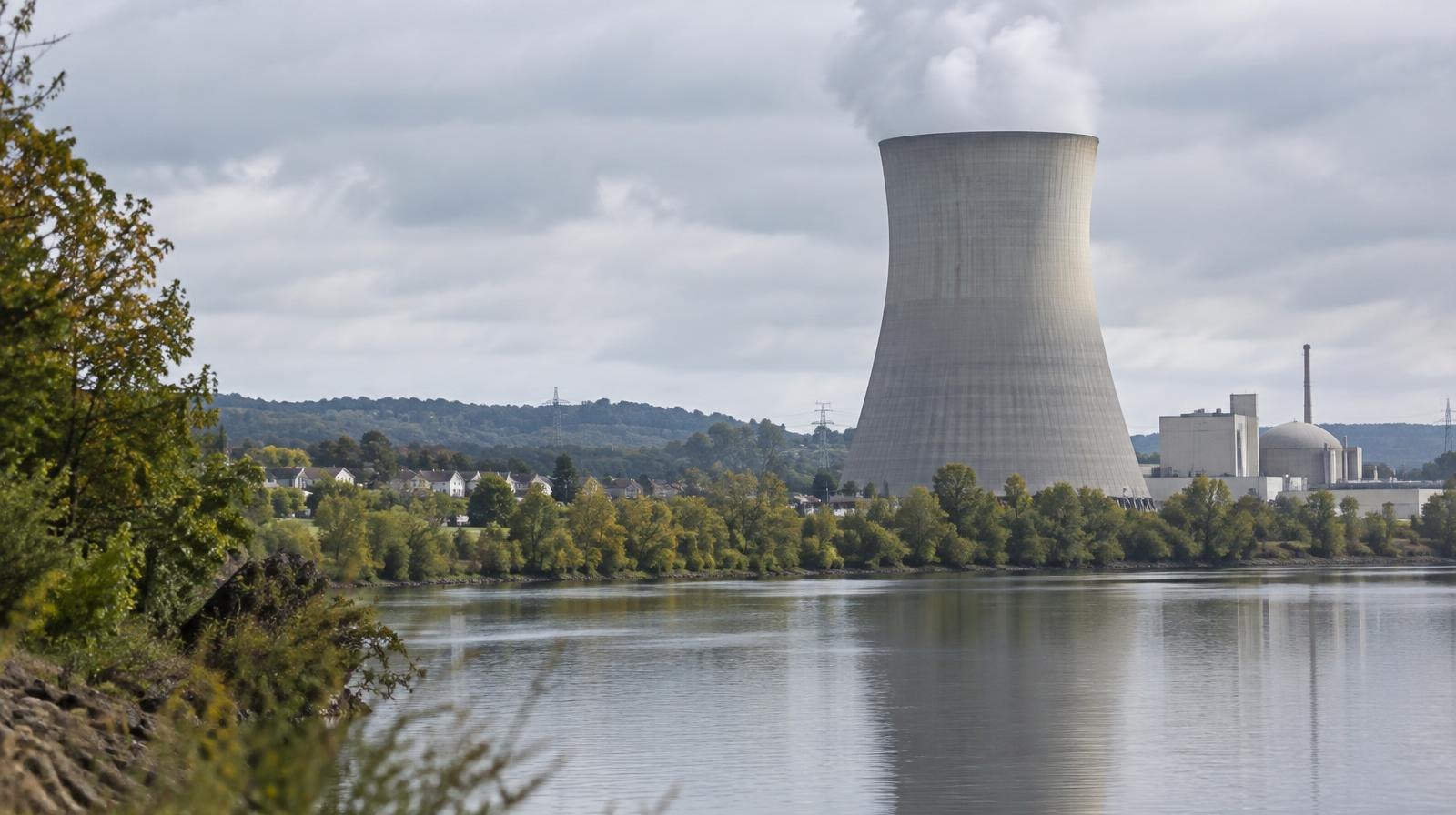
Westchester County Executive Ken Jenkins wants state regulators to block Holtec's corporate restructuring unless the company guarantees taxpayers won't get stuck paying for Indian Point's cleanup.
Jenkins sent a letter to the New York State Public Service Commission (PSC) calling on the agency to reject the restructuring without "clear, enforceable guarantees" that the changes will not jeopardize decommissioning of the Indian Point Energy Center or place additional financial burdens on county taxpayers and utility ratepayers, according to a Westchester County press release.
The letter raised concerns that the proposed restructuring could weaken corporate accountability, diminish existing financial protections or leave the public responsible for potential funding shortfalls.
"Let me be absolutely clear: the people of Westchester County will not be left holding the bill for the decommissioning of Indian Point," Jenkins said.
"This is not an old movie theater or an abandoned supermarket. This is a former nuclear power facility surrounded by homes, schools and neighborhoods."
Jenkins added that Holtec's "responsibility does not disappear simply because a corporation decides to reorganize."
What Holtec is proposing
The restructuring in question is what Holtec calls the "NAMCO Restructuring." In a registration statement filed with the Securities and Exchange Commission on Sept. 8, Holtec Nuclear Corporation described transferring certain decommissioning sites and related liabilities from one of its subsidiaries to an entity called DEAMCO, a subsidiary of Holtec Holdings.
The filing stated the restructuring is meant to "reduce our exposure to market fluctuations" in nuclear decommissioning trust funds "and uncertainties regarding decommissioning-related costs by transferring the responsibility for managing" those trusts "and remaining decommissioning work outside of the company."
Indian Point is one of five nuclear sites in Holtec's decommissioning portfolio, alongside Oyster Creek, Pilgrim, Big Rock Point and Palisades, according to the SEC filing.
Why it matters locally
Holtec's corporate structure has drawn scrutiny before. Each closed plant exists within its own special-purpose limited liability company, and those subsidiaries control billions of dollars in decommissioning trust funds while maintaining limited legal liability, according to state attorneys general from Massachusetts and New York, as reported by the Bulletin of the Atomic Scientists in November 2025.
At a 2022 congressional hearing, Seth Schofield with the Massachusetts attorney general's office testified about the risk. "The entities that are legally responsible for what happens at the site are two LLCs," Schofield said of the Pilgrim plant. "And the only asset those licensees have is the trust fund. Hence, that is a big source of our risk."
The plant sits on the Hudson River near Buchanan, N.Y., in one of the most densely populated areas of the country.