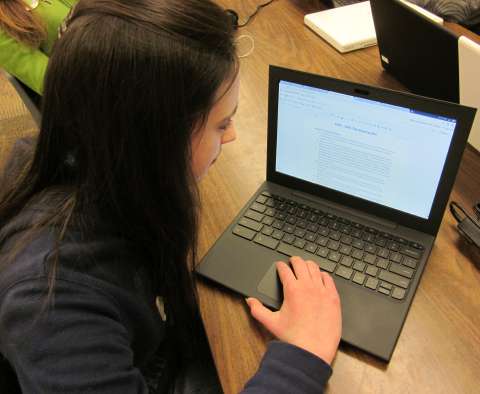
Rye City School District is planning stricter controls on Chromebook use and app access for the fall, after a late-spring internet audit found students persistently trying to bypass content filters on school-issued devices.
The district conducted the audit from Saturday, May 17 through Monday, June 15, monitoring traffic on its wireless network across all K–12 buildings. Technology Director Dr. Kaitlyn Sassone told the Board of Education at its Tuesday, June 16 meeting that some students were using personal hotspots and VPNs to get around the district's blocks. The attempts targeted Snapchat, ESPN, and SoundCloud, Sassone said.
The audit data offered some reassurance: Rye students averaged 0.93 hours of in-school screen time per day, below the 1.22-hour average for comparable districts. Elementary students logged 10 to 45 minutes daily; secondary students logged 60 to 90 minutes. Nineteen of the 20 most-used applications were district-approved platforms, primarily Google Classroom, Google Docs, and Google Slides. The exception was Quizlet, a study tool that has drawn criticism nationally because users can post and share answers publicly, potentially giving students direct access to graded assignment answers.
District officials also cited academic gains as evidence that current technology practices aren't undermining instruction: ELA passing rates rose from 61% in 2015 to 85.7% in 2025, and math scores climbed from 61% to 86.4% over the same period. Assistant Superintendent Lauren Santabarbara called the improvement "a pretty significant increase over a 10-year period."
But parents weren't satisfied.
Liza Forbes, who has two children at Milton Elementary, told the board that screen time is only part of the problem. "Kids are exhausted from the gamification of apps and resisting the constant distractions and notifications," Forbes said. "So in addition to learning academics in school, we're helping our kids build cognitive foundations for the rest of their lives."
Forbes cited a specific example: her fourth grader's Revolutionary War project required creating a Google video rather than writing an outline or essay. Other parents at the meeting asked the district to expand the audit to cover a longer sample period and to include data about how students use apps, not just which ones they access.
Superintendent Dr. Tricia Murray acknowledged the concern. She told the board that filters blocked inappropriate content but that some sites students attempted to reach "could be distracting their learning." In a statement to the Rye Record, Murray said the district has established updated K–12 technology best practices and is implementing refinements to promote more balanced use of technology.
The district said it would take three steps before the fall: develop a document clarifying best practices for instructional technology, decide whether K–8 students take Chromebooks home, and determine which apps are approved at which grade levels. Officials said updates would be shared with families by the end of June 2026.
The review comes during the first full year of New York's bell-to-bell cellphone ban, signed by Gov. Kathy Hochul ahead of the 2025–2026 school year. With personal phones locked away, parent attention has shifted to how much screen time students accumulate on school-provided devices.
The district has not announced a date for the next Board of Education meeting at which the finalized tech policy will be presented.